Johanne Sofie Krog Nedergaard
Postdoc working on inner speech. Other academic interests include aphasia in Kalaallisut, perspective-taking in communication, and language-augmented cognition. Peruse my PhD thesis on inner speech here.
Do you need to talk to yourself to stay focused on a very boring task?
We asked people to stare at a blank screen for several minutes at a time and occasionally prompted them to say what was going on in their heads. We then tried to predict reaction time to the prompt from the contents of inner experience.
TRAINCREASE collaboration with Anna Borghi on the role of language in representing and processing different kinds of abstract concepts.
People had to decide between three images of abstract concepts (like freedom, conscience, and loneliness) which one did not depict the same concept as the others. Try it out below:

While people solved these problems, we also interfered with their visual or verbal processing to see what kinds of resources were involved in thinking about abstract concepts.
Generously supported by IMC seed funding.
Which word would you provide to get someone else to say 'cheese'? Photography, brie, pizza, smelly, or something else? In this game, people provided single clue words to get their partner to guess target words. We thought people would get better at this when they interacted many times - but they did not!
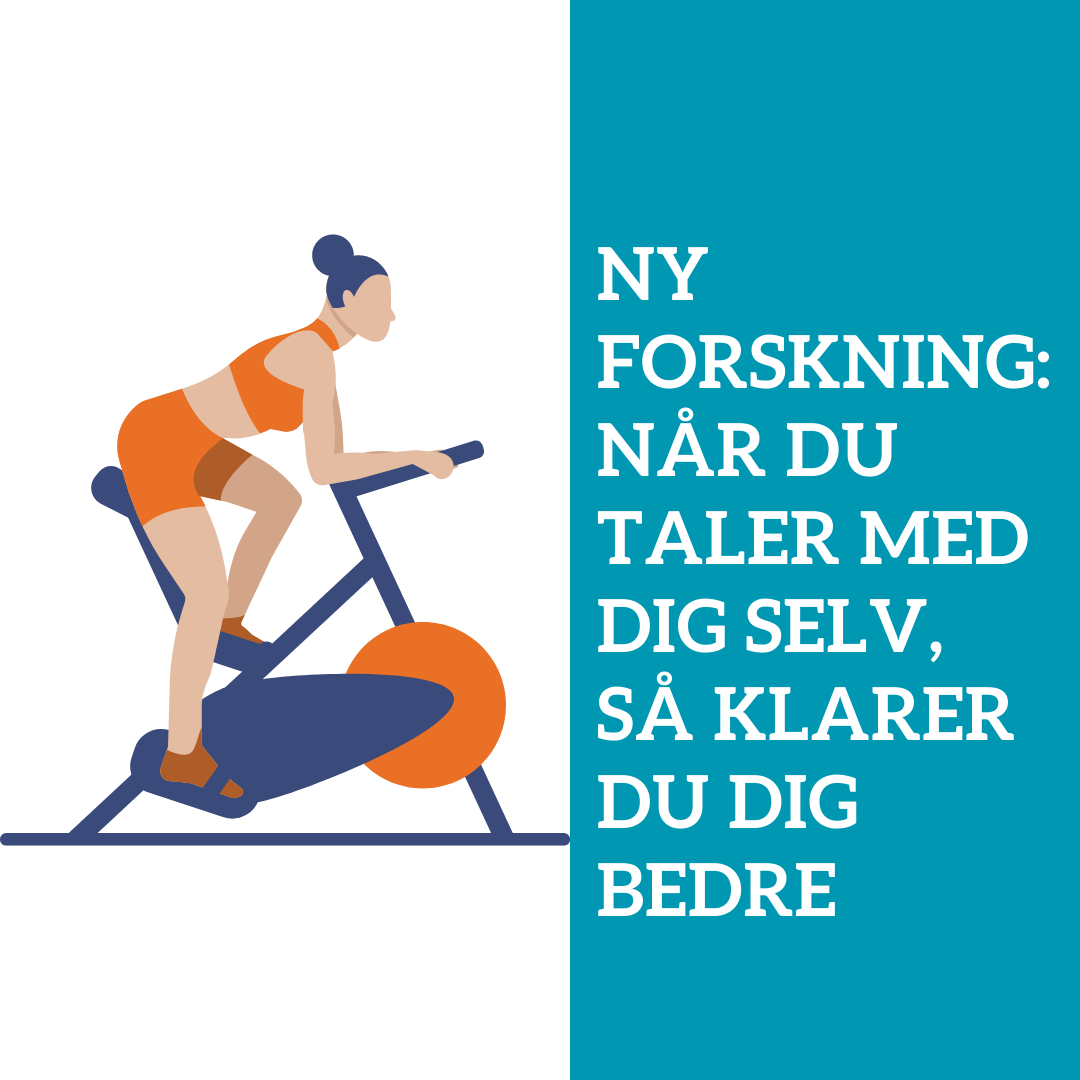
Participants cycle on a stationary exercise bike while trying to perform simultaneous visuospatial and verbal working memory tasks. The main idea is that if people need to talk to themselves to push themselves, they should bike slower when they're distracted from talking to themselves.
Nedergaard, J., Simonsen, F. M., Trondhjem, N. B., Bastiaanse, R., Hendriksen, M. A., Nielsen, M., & Boye, K. (2026). An exploration of aphasia symptom profiles in speakers of Kalaallisut (West Greenlandic).Clinical Linguistics & Phonetics
Nedergaard, J., & Lupyan, G. (2024). Not everybody has an inner voice: Behavioral consequences of anendophasia.Psychological Science, 35(7), 780-797.
Nedergaard, J., & Smith, K. (2024). Are you thinking what I'm thinking? Perspective-taking in a language game. Plos one, 19(1), e0288330.
Nedergaard, J., Christensen, M. S., & Wallentin, M. (2023). Mind over body: Interfering with the inner voice is detrimental to endurance performance. Psychology of Sport and Exercise, 102472.
Nedergaard, J., Skewes, J. C., & Wallentin, M. (2023). "Stay focused!": The role of inner speech in maintaining attention during a boring task.Journal of Experimental Psychology: Human Perception and Performance, 49(4), 451-464.
Nedergaard, J., Wallentin, M., & Lupyan, G. (2022). Verbal interference paradigms: A systematic review investigating the role of language in cognition. Psychonomic Bulletin & Review, 1-25.
Nedergaard, J., Christensen, M. S., & Wallentin, M. (2021). Valence, form, and content of self-talk predict sport type and level of performance. Consciousness & Cognition, 89, 103102.
Nedergaard, J. S., Martínez-Ferreiro, S., Fortescue, M. D., & Boye, K. (2020). Non-fluent aphasia in a polysynthetic language: five case studies. Aphasiology, 34(6), 654-673.

Inner Speech: Content, Functions, and Individual Differences.
What does the inner voice do? Self-regulation in sport and cognitive psychology.
Are you thinking what I'm thinking? Perspective-taking in a language game